If Part 1 explored network sovereignty—the ability to explain traffic paths and security policy—Part 2 turns to validation sovereignty: the ability to explain code changes and the quality criteria behind them. For an operator running its own cloud platform, sovereignty depends not only on which changes enter the operational baseline, but also on how those […]
kt cloud shares how OpenStack, OVN, Kubernetes, and Zuul helped translate digital sovereignty into an engineering-led operating model grounded in network control, transparent validation, operational resilience, and upstream collaboration.
By combining OpenStack with open source cloud technologies, ITU, dNation, and Vanilla Core created a sovereign platform that keeps public sector infrastructure open, portable, and under operator control
How India’s Pinaka ZTi distribution demonstrates how hardened, validated OpenStack can deliver sovereign, government-grade cloud infrastructure by bridging the gap between upstream open source and production-ready enterprise deployments.
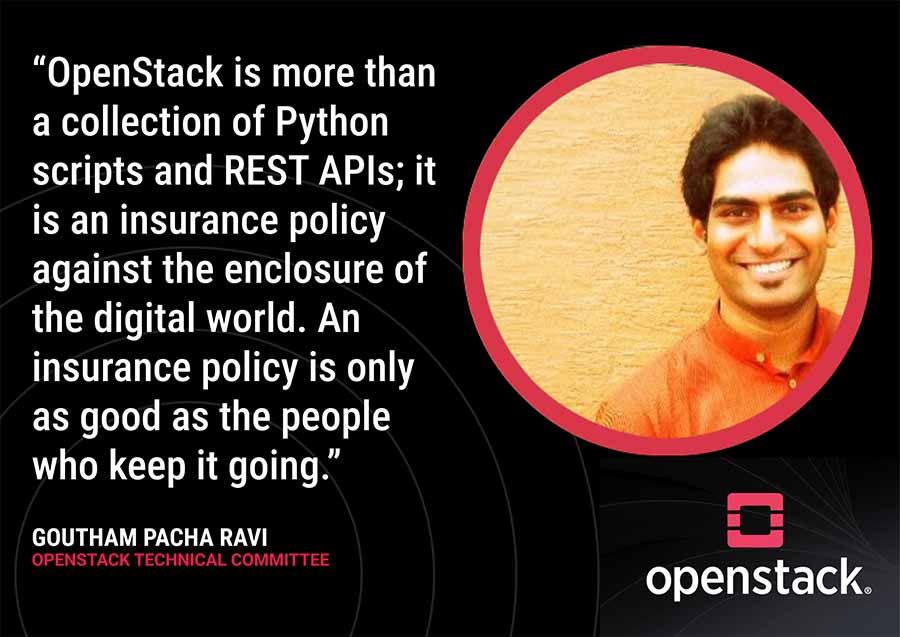
OpenStack’s long-term success as a sovereign, open cloud platform depends not just on its technology but on recognizing and sustaining the often overlooked “invisible labor” of contributors whose maintenance work is critical to the health and resilience of the community.
NUBO, a French interministerial cloud project, built and operated by the Ministry of Economics and Finance, has emerged as a leading example of how open-source technologies — especially OpenStack — can power sovereign, secure, and scalable digital infrastructure.
STACKIT, the cloud and colocation provider of Schwarz Group, has fully embraced the concept of digital sovereignty by leveraging OpenStack.
What’s digital sovereignty, how does open source contributions to it, and how will it affect our future?
Find out why digital sovereignty and the goals of the GAIA-X initiative can be achieved with open infrastructure.